VC Funding's Brutal 2026 Pivot: Why AI Is Out, 'Hard Tech' Is In

VC Funding's Brutal 2026 Pivot: Why AI Is Out, 'Hard Tech' Is In

DP
Daniel Park

Economy & Markets Editor

·4 min read·747 words
venturecapitalgovernmentsoftwaremanufacturing
Share:

Forget the headline number. The press releases will tell you that global venture funding is on track for a $75 billion quarter. They’ll call it “stabilizing.” They’ll talk about “a return to fundamentals.” Don't buy it. That’s the corporate spin. The real story, the one happening in pitch meetings from Sand Hill Road to Berlin, is a brutal, frantic rotation of capital unseen since the dot-com crash.

The money isn't just seeking safety. It's fleeing an entire thesis. For a decade, the VC playbook was simple: find a software that could scale to millions of users at near-zero marginal cost. The AI boom of 2023-2024 was the apotheosis of that strategy. Now, it’s a liability.

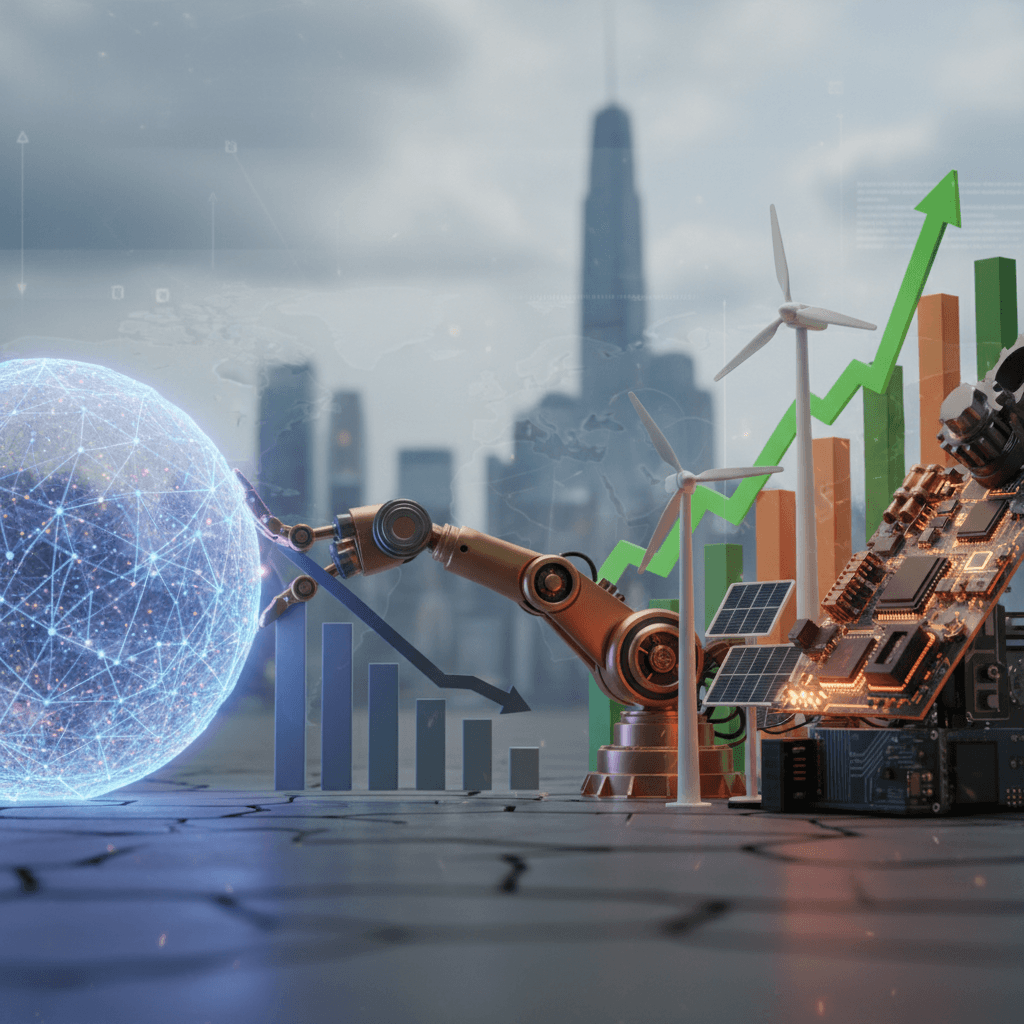
I’ve been looking at the preliminary Q1 2026 numbers, and the trend is stark. While overall funding is down about 15% from this time last year, that drop masks the carnage underneath. Funding for "Generative Enterprise AI"—the darlings of two years ago—has fallen off a cliff, down an estimated 40% from the previous quarter. Meanwhile, investment in what the industry is calling "Hard Tech" or "Deep Tech" is surging. We’re talking robotics, advanced manufacturing, new energy sources, and synthetic biology. These sectors are up a collective 35% year-over-year.

This isn't a correction. It’s a realignment driven by two very real, very un-virtual forces: geopolitics and government cash.

How Does Venture Capital Work in This New Environment?

For years, the venture capital model was about finding a technological edge and a massive Total Addressable Market (TAM). Today, it’s about finding a government subsidy and a defensible supply chain. The game has fundamentally changed.

VCs are now chasing the tidal wave of public money unleashed by legislation like the U.S. Inflation Reduction Act and the CHIPS and Science Act. These aren't small grants; they are nation-building-level firehoses of capital aimed squarely at onshoring manufacturing, securing energy independence, and competing with China. According to a recent analysis by the Brookings Institution, government-related incentives for these sectors now represent a multi-trillion-dollar opportunity over the next decade.

A venture capitalist's job is to find asymmetric returns. Why bet on another AI-powered copywriting tool struggling for differentiation when you can back a next-gen battery company that has a guaranteed government loan and a 30% production tax credit locked in? It’s not even a fair fight.

“We used to ask, ‘Can this be a billion-dollar company?’ Now we ask, ‘Does this qualify for the Advanced Manufacturing Production Credit and can its components be sourced outside of Asia?’ It’s a different conversation.”
— A managing partner at a prominent Silicon Valley firm told me last week, on condition of anonymity.

This explains the recent mega-rounds that seem to defy the broader market cooldown. Look at Axiom Robotics, a Pittsburgh-based firm automating warehouse logistics, which just closed a $350 million Series C. Or Lumina Fusion, a fusion energy startup out of the EU, pulling in a $500 million round. These companies aren't selling software subscriptions. They are selling atoms, electrons, and geopolitical security—and VCs are buying.

The money is following the path of least resistance, and right now, that path is paved with public funds. As I've written before, the IPO market is back, but it's not the party you remember, and investors are rewarding companies with tangible assets and government backing, not just user growth charts.

How Are Venture Capitalists Making Decisions Now?

The diligence process itself has been rewired. I remember my Wall Street days in the early 2000s; after the bubble burst, we stopped caring about "eyeballs" and started obsessing over cash flow. A similar, though more complex, shift is happening in VC.

The new diligence checklist looks something like this:

  1. Geopolitical Resilience: How exposed is the supply chain to potential tariffs or a conflict in the South China Sea? Can critical components be manufactured in North America or Europe? This isn't just a risk factor; it's often the primary thesis.
  2. Subsidy & Grant Eligibility: The first call a VC makes might not be to a tech expert, but to a policy wonk who understands the fine print of the latest energy bill. They are modeling returns based on tax credits, not just customer lifetime value.
  3. Defensibility Through Physics, Not Code: A competitor can copy your software. It’s much harder to copy a patented manufacturing process for a new composite material or a unique bioreactor design. The moats are physical.

This is a world away from the growth-at-all-costs software mantra. The entire definition of venture capital is evolving

Related Articles