Why Pokémon’s Free Game Boy Jukebox is a Brilliant Trap
GAMINGNews

Why Pokémon’s Free Game Boy Jukebox is a Brilliant Trap

Maya Rodriguez
Maya Rodriguez

Culture & Entertainment Editor

·5 min read·1053 words
gamemusicyoutubejukeboxvideo
Share:

The 8-Bit Elephant in the Room

I still remember the exact, piercing pitch of the Pallet Town theme bleeding through the terrible single speaker of my atomic purple Game Boy Color. If you're anywhere near my age, that specific 8-bit chiptune is permanently burned into your millennial hippocampus. It's the sound of trading cables, AA batteries, and avoiding eye contact with other trainers on Route 1.

For years, if you wanted to listen to that specific nostalgia while answering emails or writing code, you had to rely on bootleg YouTube compilations. You’d search "Pokémon lo-fi beats to study to" and pray the video didn't get nuked by copyright lawyers mid-playlist.

Well, the lawyers finally found a better solution than just suing people.

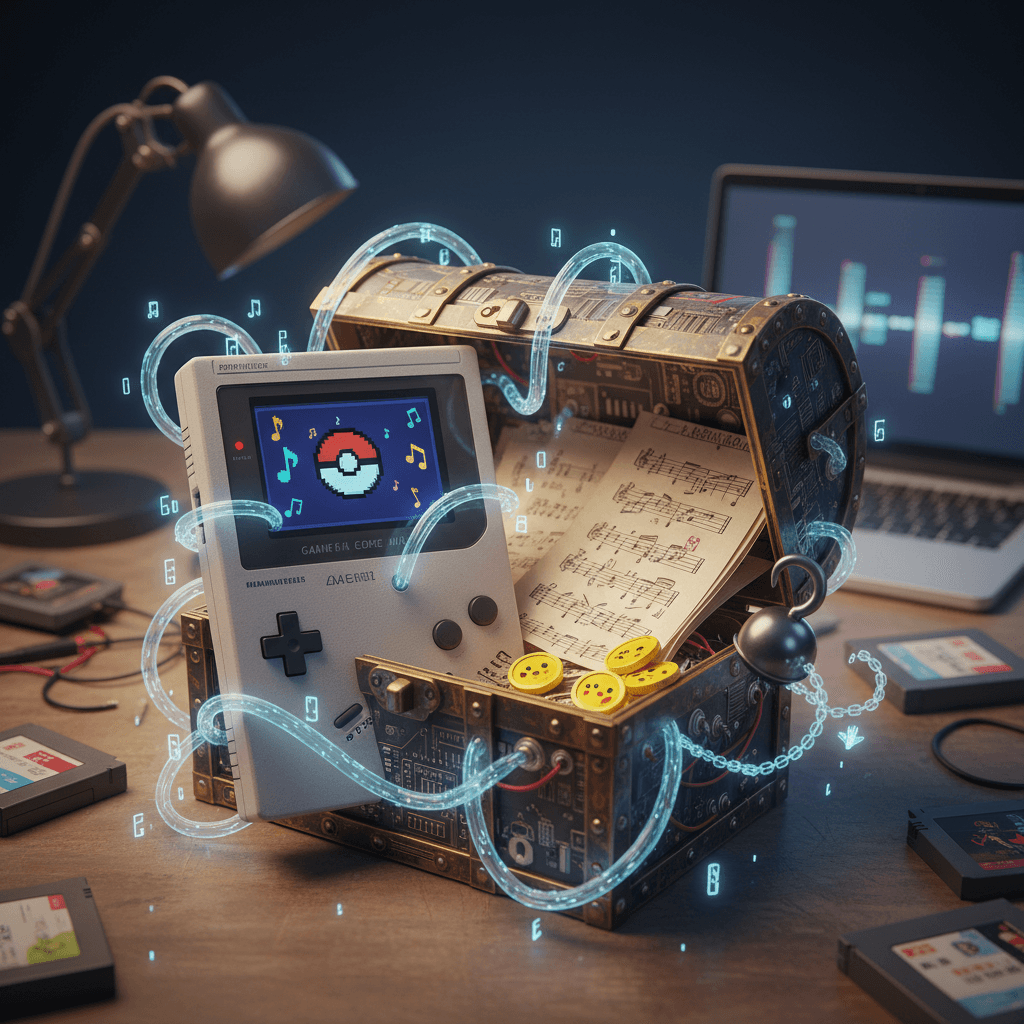
This week, The Pokémon Company quietly launched a web-based Game Boy Jukebox via the Pokémon Center website. It's exactly what it sounds like: a beautifully designed, browser-based music player that mimics the classic handheld console interface, pumping out official, high-quality tracks from the original Pokémon Red, Blue, and Yellow games.

The internet is collectively swooning over the cute UI and the hit of pure, uncut nostalgia. But as someone who has covered the intersection of gaming culture and corporate IP for a decade, I can tell you there's a lot more going on here than just a sweet gift for the fans.

The Economics of Background Noise

To understand why a massive corporation is suddenly giving away its crown jewels for free in a web browser, we have to look at the numbers. Video game music isn't just a niche hobby for nerds anymore—it's a massive, highly lucrative sector of the streaming economy.

The "background listening" market is enormous. On Spotify alone, video game soundtracks pull in tens of millions of monthly listeners. In fact, video game scores have become so culturally dominant that they're now regularly performed at prestigious venues like the Royal Albert Hall, a shift recently documented by the BBC.

But Nintendo and The Pokémon Company have historically hated the modern streaming ecosystem. They are notoriously protective of their IP. Back in 2022, Nintendo issued over 1,300 copyright strikes against popular YouTube music archivist GilvaSunner in a single day, effectively wiping out a massive community library of classic game tracks.

This aggressive legal strategy created a vacuum. Fans still wanted to listen to the 28-year-old tracks from Pokémon Red and Blue, but the official avenues were either nonexistent or locked behind clunky hardware.

So why the sudden change of heart with a free web player?

The Contrarian Angle: It's Not a Gift, It's a Walled Garden

Everyone is praising the Pokémon Center for this delightful little web app. But here's the real question: why build a bespoke browser jukebox instead of just dumping the tracks onto Spotify or Apple Music like every other publisher?

Because it's a trap.
I don't mean that maliciously. It's a brilliant, calculated business trap. By hosting the Game Boy Jukebox directly on the Pokémon Center website—which is, let's not forget, their primary e-commerce storefront—they are reclaiming the traffic that used to go to YouTube bootleggers.

Every minute you spend listening to the Gym Leader battle theme on their site is a minute you aren't watching a monetized YouTube video run by a third party. More importantly, it's a minute you spend staring at a screen that is literally one click away from a storefront selling $40 Pikachu plushies and trading card booster boxes. It's the exact same brand-preservation strategy we saw when Lego tried to digitize their physical bricks to keep kids inside their own ecosystem.

They aren't just protecting their copyright. They're converting passive listeners into active shoppers.

Comparing the Precedent: The Frictionless Pivot

What makes the Game Boy Jukebox so fascinating is how it directly contradicts Nintendo's usual playbook.

Just recently, Nintendo launched the official Nintendo Music app, which was widely covered by outlets like The Verge. But that app is locked behind a Nintendo Switch Online subscription. It requires you to download a dedicated mobile application, log in, and pay a recurring fee.

The Game Boy Jukebox is the exact opposite. It's frictionless. You click a link, and the music starts playing in your browser. No login. No subscription. No app download.

The last time we saw a gaming giant pivot this hard to frictionless web access was when Microsoft started pushing Xbox Cloud Gaming to browsers to bypass Apple's App Store restrictions. The Pokémon Company realizes that if you want to beat the convenience of a YouTube search, you have to offer something equally immediate. The web browser—the original open platform—is ironically becoming the best place for closed IP holders to exert total control.

Editor's take: I love the Jukebox, but I also deeply resent what it represents. As a gamer who cares about preservation, relying on massive corporations to benevolently host our childhood memories on their marketing servers feels incredibly precarious. The bootleg YouTube channels, for all their legal gray areas, were actually providing a public archiving service. When the Pokémon Center decides this Jukebox is no longer driving enough plushie sales, they can pull the plug with a single line of code. And then what?

The Downstream Effect

We are watching the beginning of the end for third-party video game music streaming. The era of the wild west YouTube compilation is closing, not just because of copyright strikes, but because publishers have finally figured out how to monetize our nostalgia directly.

If this web-based, e-commerce-adjacent music player successfully drives engagement and sales for The Pokémon Company, it won't be a one-off experiment.

Here is my specific prediction: By Q4 2026, we will see at least three major Japanese gaming publishers—I'm looking squarely at Square Enix, Sega, and Capcom—begin pulling their legacy soundtracks from Spotify and Apple Music. Instead, they will launch their own ad-supported or merchandise-linked web players.

For professionals in digital marketing and e-commerce, this signals a massive shift in how brands view "ambient" content. Background music is no longer just marketing material; it's a lead generation tool. If you own the IP to a culturally significant sound—whether that's the chiptune of a 1990s Game Boy or the startup chime of an old operating system—you are sitting on a goldmine of captive web traffic.

The Pokémon Company just proved that you don't need to sue your

Related Articles