The Song No One Saw Coming
On Saturday, February 28th, a song called "Silicon Heartbeat" was uploaded to Spotify, Apple Music, and the usual suspects by an artist named "Aura." By Tuesday, March 3rd, it was the #1 song on the planet. Not #1 on some obscure indie chart. Number one. Globally. It unseated a titan of pop who had a $20 million marketing machine behind her latest single.
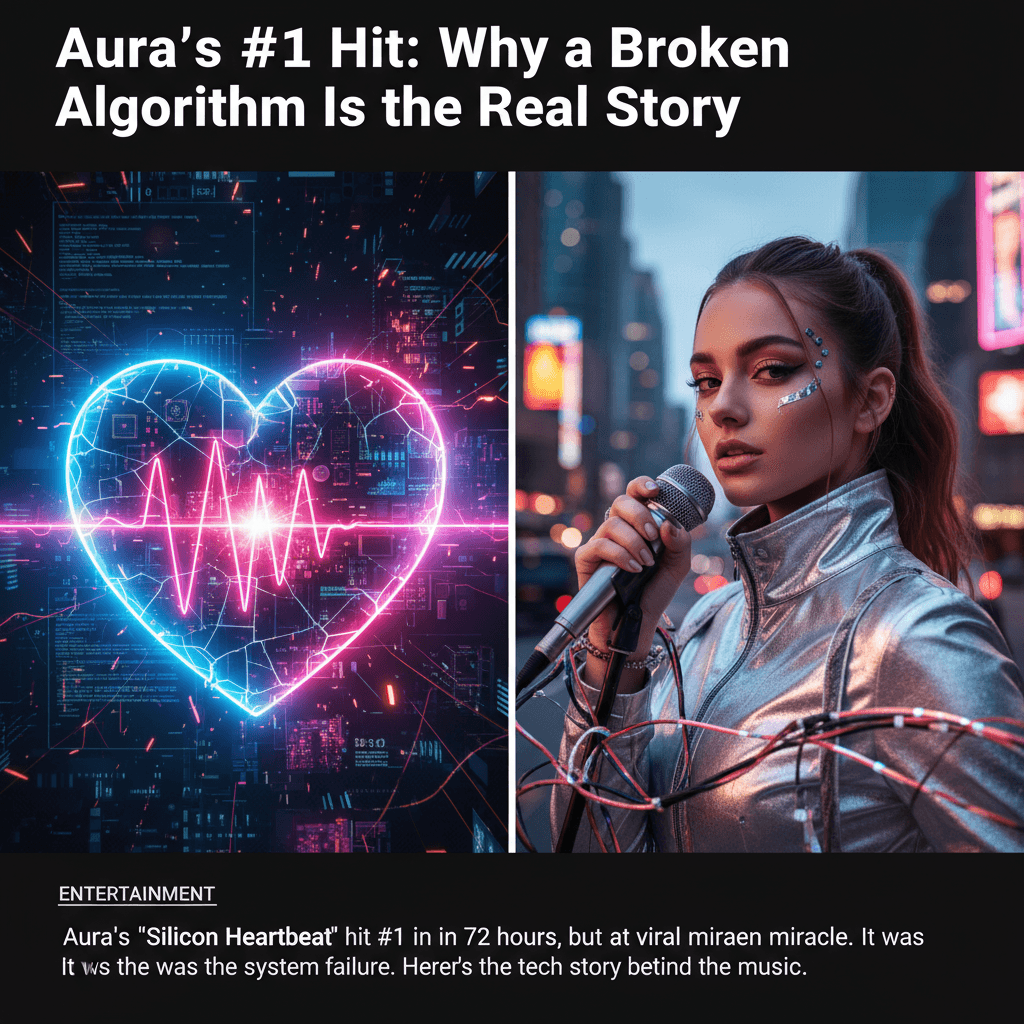
Aura had no label, no manager, no TikTok presence, and, as far as anyone could tell, no physical body. The artist photo was a glitchy, generative art mess. The song itself was a strange, hypnotic mix of synth-pop and melancholic lyrics about digital loneliness. It was good, sure. But #1-in-72-hours good? No. Nothing is.
I’ve sat through enough product launches promising to "revolutionize music discovery" to know that revolutions are messy, expensive, and almost never happen overnight. This wasn't a revolution. This was a system crash. The entire entertainment news cycle, as reported by outlets like Yahoo, is chasing the human-interest story of a mysterious new star. They’re missing the point entirely. The real story isn't Aura. It's the ghost in the machine that created her.
What's happening in entertainment news that actually matters?
For the last decade, we've handed the keys to cultural curation over to algorithms. We did it willingly. It was convenient. These complex recommendation systems, built by armies of PhDs in Mountain View and Stockholm, promised to find us the perfect next song, the perfect next movie, the perfect piece of content to fill the silence.
And they worked. Mostly. They created filter bubbles, sure, but they were also incredibly effective at surfacing music that was adjacent to what you already liked. They were built for predictability. The models at places like Spotify are designed to take a song with a few thousand streams and a positive engagement signal (people not skipping it, adding it to playlists) and cautiously show it to a slightly larger audience. Then a larger one. It’s a slow, controlled burn.
"Silicon Heartbeat" wasn't a controlled burn; it was a flash fire. It skipped every step. It's the digital equivalent of a self-published author's book appearing in every bookstore window in the world, overnight, without a single purchase order. This isn't just an outlier. It's evidence of a catastrophic feedback loop—the kind of bug I used to spend nights debugging in backend code, only this time it was playing out on the global cultural stage.
By the Numbers: The Anomaly
Let’s put this surge into perspective. This isn't your typical viral hit that builds over two weeks on TikTok. This was a vertical takeoff.
- Time to Global #1: 72 hours. The previous record for an unknown artist was around 3 weeks.
- Initial Velocity: The track went from under 1,000 streams in its first 24 hours to over 15 million daily streams by day three. That's a 1,500,000% increase.
- Playlist Penetration: By Monday, it was being auto-added to tens of millions of users' algorithmically generated playlists, from "Chill Morning" to "Workout Beats." The system decided, with terrifying certainty, that everyone needed to hear this song.
- Marketing Spend: $0. The major label single it displaced had a reported $7 million in first-week promotional backing.
This isn't a success story. It’s a stress test that the system failed spectacularly. It's the same kind of algorithmic brittleness we saw when a hockey player's personal life briefly broke the gossip algorithm, proving these systems are powerful but have no common sense.