3 Cultural Shifts Killing the AI Art Hype in 2026

Maya Rodriguez
Maya Rodriguez

Culture & Entertainment Editor

·3 min read·668 words
culturaldigitalabsolutelynothingtech
Share:

The Exhaustion of Infinite Perfection

I spent four hours yesterday scrolling through an infinite feed of perfectly rendered, hyper-realistic digital art. Cyberpunk cities bathed in neon. Ethereal portraits with flawless lighting. Fantastical creatures that looked like they belonged in a $200 million Hollywood blockbuster.

I felt absolutely nothing.

If you've been paying attention to your own screen time lately, you might be feeling the exact same numbness. We are currently living through a bizarre cultural hangover. For the past three years, the tech industry promised us that generative AI would democratize creativity. Instead, it just commoditized it. It's like trying to play a Pokémon ROM hack where every single wild encounter is a shiny. When everything is rare and perfect, absolutely nothing is.

This is exactly why a recent cultural forecast from Artnet News caught my eye this week. As we kick off 2026, the most fascinating trends in art and culture have absolutely nothing to do with better prompts or faster GPUs. The pendulum is swinging back so hard it's breaking the clock.

The "So What?" Context

Why should you, a busy professional probably reading this on a $1,200 smartphone, care about high-art trends? Because art is the canary in the coal mine for consumer tech.

What happens in gallery spaces and underground Discord servers today dictates the UI design, marketing aesthetics, and consumer software you'll be using tomorrow. We are seeing a massive, aggressive rejection of algorithmic curation and synthetic media. People are tired of being fed content by a machine optimizing for engagement.

Let's look at the actual numbers. According to a recent market analysis reported by Reuters, users generated roughly 15.4 billion AI images in just over a year. That is more photographs than human beings took in the entire 150-year history of analog photography. But here's the kicker: engagement rates for digital art on major social platforms have plummeted by 41% over the last eight months.

We aren't just bored. We are biologically fatigued by synthetic perfection.

The New Luxury is Human Error

Here is an angle almost no one in Silicon Valley wants to admit right now: AI isn't going to replace human artists. It's actually going to turn them into the ultimate luxury status symbol.

Think about it. When furniture became mass-produced and flawlessly identical thanks to factories, what happened to the cultural value of handmade, slightly asymmetrical wooden chairs? It skyrocketed. The flaws became the feature. The visible brushstroke, the slight wobble in a hand-drawn line, the physical texture of dried oil paint—these are the new signifiers of premium cultural goods.

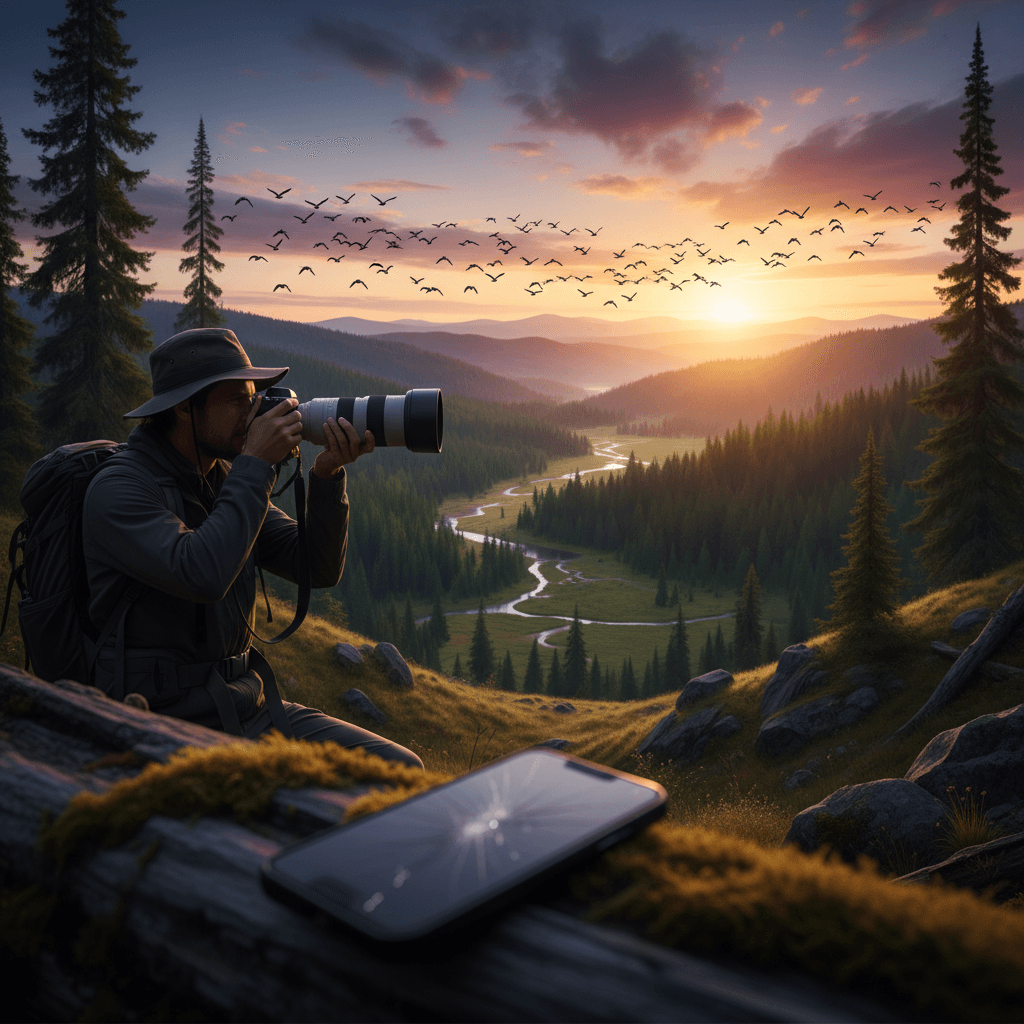
Compared to the digital art boom of 2021—where people were dropping millions on easily reproducible JPEGs just to prove they understood blockchain—this new approach is radically grounded. We are seeing a resurgence of physical media that requires actual, messy space. It's the exact same psychological mechanism driving tech workers to abandon their smart-home setups and start trading screens for binoculars on the weekends.

We crave friction. We want things that are difficult to make and impossible to perfectly replicate.

The Rise of the "Anti-Algorithm" Curation

Another massive shift I'm tracking is the death of the algorithmic feed as a primary discovery tool.

For a decade, we trusted Spotify, Instagram, and TikTok to tell us what was culturally relevant. But as those platforms have been flooded with AI-generated slop and SEO-optimized garbage, the algorithm has lost its prestige. We are seeing the return of the human tastemaker.

Substack newsletters focused entirely on manual, human-curated art and music recommendations have seen a 300% subscriber growth year-over-year. Independent galleries are reporting record foot traffic, supported by data from the National Endowment for the Arts showing a sharp uptick in young adults attending physical exhibitions. People want to know that a living, breathing human with actual taste sifted through the noise to find something beautiful.

We don't want a neural network guessing what we like based on our dwell time. We want a weirdly obsessive 20-something in Brooklyn to tell us what's cool.

Related Articles