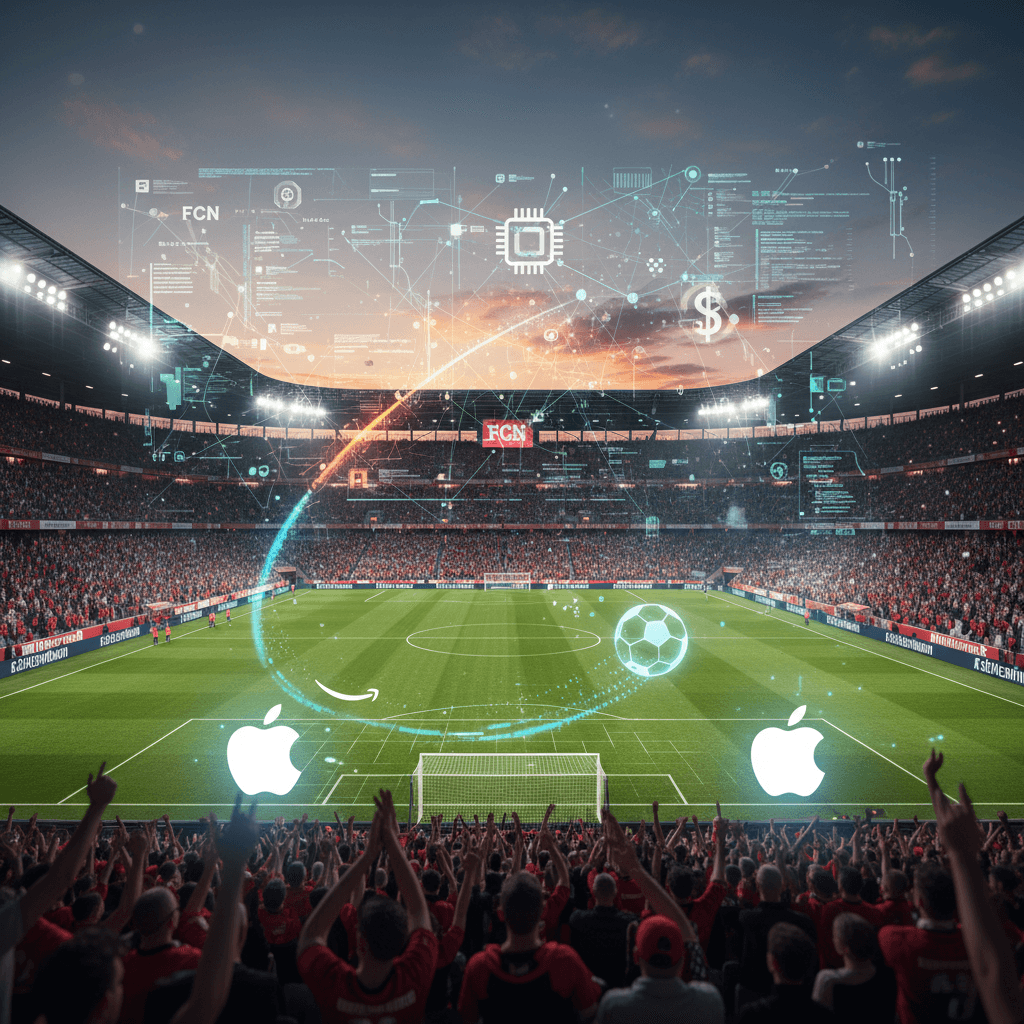
If you checked your social feeds this morning, you might have seen "fcn – düsseldorf" trending and thought, "Huh, must be a big soccer game in Germany." You’re not wrong, but you’re not right either. The consensus view is that this is a nail-biter of a match in the 2. Bundesliga, Germany's second division, with massive implications for promotion. It’s a classic story of two legacy clubs clawing their way back to the top flight.
But that’s not the real story. It’s the cover story.
I’ve been watching the backchannel chatter and the network traffic reports out of Frankfurt for two weeks, and something is off. The real action isn't on the pitch; it's in the fiber optic cables running out of Nuremberg's Max-Morlock-Stadion. This game isn't just about three points in a league table. It's a stealth, large-scale beta test for a piece of broadcasting technology that could fundamentally change how we watch live events. And the price tag for the company behind it is rumored to be north of €1.5 billion.
What Is This FCN vs Düsseldorf Match Really About?
Forget about strikers and goalkeepers for a minute. The key players here are a quiet German startup called Echtzeit Dynamics GmbH and the tech giants salivating over their product. For months, Echtzeit—founded by a couple of engineering wizards I'm told came from the Fraunhofer Institute, the same people who gave us the MP3—has been developing a technology they internally call "Chrono-View."
The idea is simple to describe but hellishly complex to execute: give every single viewer the power of a live broadcast director. Imagine you're watching the game on your Apple Vision Pro or your tablet. You see a controversial foul. Instead of waiting for the official replay, you just scrub back 10 seconds of the *live* feed on your own device, switch to the overhead camera angle, zoom in, and then jump right back to the live action. No buffering. No waiting for a producer in a truck to do it for you.
This isn't just a better replay. It’s a complete decoupling of the viewer from the broadcaster's linear timeline. It’s the kind of tech I’ve heard pitched in a hundred VC meetings, usually followed by a quiet laugh after the founders leave. It’s always been a data and latency nightmare.