The $36B Design Flaw That Put a Martini in a Kid's Lunch

The $36B Design Flaw That Put a Martini in a Kid's Lunch

Maya Rodriguez
Maya Rodriguez

Culture & Entertainment Editor

·5 min read·994 words
alcoholcannedjuiceindustrygeorgia
Share:

The Morning Autopilot Trap

If you’ve ever tried to pack a lunchbox at 6:45 AM while half-asleep, you already know that your brain isn't processing text. It’s processing shapes, colors, and vibes. You reach into the fridge, grab a slim, pastel-colored aluminum can with a picture of a fruit on it, toss it next to the Uncrustable, and zip the bag shut. Mission accomplished.

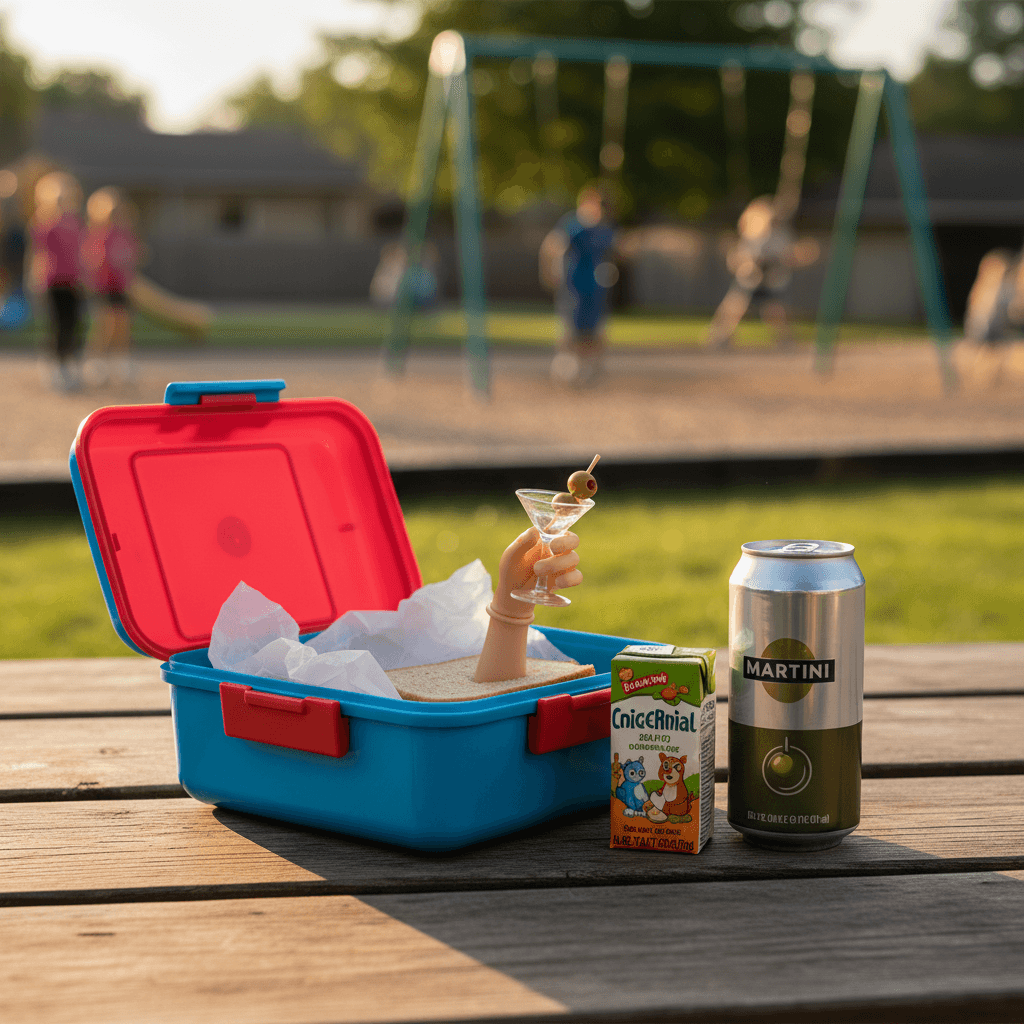
Except, as NBC News reported this week, the Newnan Police Department in Georgia had to issue a public warning after a parent did exactly this—and accidentally sent their elementary schooler to class with a canned espresso martini.

"That is NOT Apple Juice," the police department’s Facebook post pleaded, alongside a photo of a ClubTails cocktail can that, frankly, looks exactly like an Arizona iced tea or a trendy new sparkling water.

The internet’s immediate reaction was a predictable wave of mom-shaming. How could a parent be so careless? Who keeps booze next to the Capri Suns? But as someone who covers internet culture and consumer trends for a living, I’m looking at this entirely differently. This isn't a story about bad parenting. This is a story about hostile graphic design.

The Stealth Wealth of Canned Booze

We are living through the golden age of the Ready-To-Drink (RTD) cocktail. If you walk down the beverage aisle of any major grocery store right now, the visual language of alcohol has completely fundamentally changed.

Gone are the days when booze looked like booze. For decades, alcohol packaging relied on heavy glass bottles, corks, foil wrappers, and gothic fonts that practically screamed "I am for adults." But today? The aesthetic gentrification of alcohol means that a 10% ABV vodka soda is packaged to look exactly like a harmless, gut-friendly probiotic soda.

The numbers behind this shift are staggering. The global RTD alcohol market is currently hovering around $36.4 billion, and according to industry trackers at Reuters, it’s one of the only alcohol categories experiencing sustained double-digit growth. We saw a massive 42% spike in canned cocktail sales between 2021 and 2023 alone. Beverage companies are flooding the zone, resulting in a 104% increase in the number of unique RTD SKUs on shelves.

But here's the real question: why do they all look like sparkling water?

Because minimalism sells. Millennial and Gen Z consumers—my people—have been conditioned by brands like Apple, LaCroix, and Spindrift to associate clean lines, pastel matte finishes, and sans-serif fonts with "health" and "refreshment." Alcohol brands simply hijacked that visual language. They swapped out the heavy glass for slim 12oz cans, slapped some watercolor fruit illustrations on the front, and tucked the alcohol warnings into the fine print.

A Masterclass in Bad UX

This brings us back to the Georgia lunchbox incident. When you design a highly intoxicating substance to perfectly mimic the form factor of a child's juice box, you are creating a massive user experience failure. It’s the physical equivalent of dark patterns in web design.

I’ve written before about how bad UX dictates our daily lives, but usually, the stakes are just a late fee or a frustrating software crash. Here, the stakes are a third-grader doing shots at recess.

Let's look at the cognitive load required to navigate a modern refrigerator. You open the door. You see a row of tall, skinny cans. One is an Olipop. One is a Celsius energy drink (which packs a heart-stopping 200mg of caffeine). One is a High Noon hard seltzer. One is a canned cold brew. Visually, they share 90% of the same design DNA. They use the same aluminum blanks. They use the same shrink-sleeve label technology.

Your brain, operating on morning autopilot, relies on heuristics—mental shortcuts. Tall can + picture of a peach = Peach juice. The beverage industry knows exactly how human heuristics work, and they are actively exploiting them to make alcohol feel more approachable and less intimidating to younger buyers.

The Precedent: From Four Loko to Gummies

If this feels familiar, it should. We’ve been here before, and the pattern always ends the same way.

Think back to 2010. The Four Loko craze was sweeping college campuses. The original formula combined massive amounts of caffeine with alcohol, packaged in brightly colored, 23.5-ounce cans that looked like supersized energy drinks. The resulting hospitalizations forced the FDA to step in and effectively ban the combination, citing it as an unsafe food additive.

Or look at the legalized cannabis industry. In the early days of recreational weed, dispensaries were flooded with "Stoney Patch Kids" and THC-infused gummy bears that were indistinguishable from the candy aisle at a 7-Eleven. Regulators rightfully panicked. Today, most states mandate incredibly strict, drab, child-proof packaging for edibles, specifically banning designs that appeal to minors.

Yet, somehow, a canned margarita that looks exactly like a Minute Maid juice box gets a free pass. The alcohol industry has managed to dodge the regulatory hammer that hit cannabis and caffeine, largely because the "it's just a can" defense has held up in court. Until now.

Editor's take: The mainstream media's framing of the Georgia incident as a "wacky local news story" totally misses the mark. This is a massive corporate liability issue masquerading as a parenting fail. When an industry's entire marketing strategy relies on blurring the lines between "hydration" and "intoxication," collateral damage isn't an accident. It's a feature of the design. We are blaming tired moms for failing to spot the 8-point font "Contains Alcohol" warning on a can that is deliberately engineered to look like sparkling apple juice.

The Downstream Effect: What Happens Next

The Georgia lunchbox martini isn't an isolated incident; it's a canary in the coal mine. As the RTD market pushes past the $40 billion mark globally, the physical real estate of our grocery stores is becoming dangerously chaotic. We have alcoholic Mountain Dew. We have alcoholic SunnyD. We have hard Lipton Iced Tea.

The brands are playing a dangerous game of IP chicken, leveraging nostalgic childhood beverage brands to

Related Articles