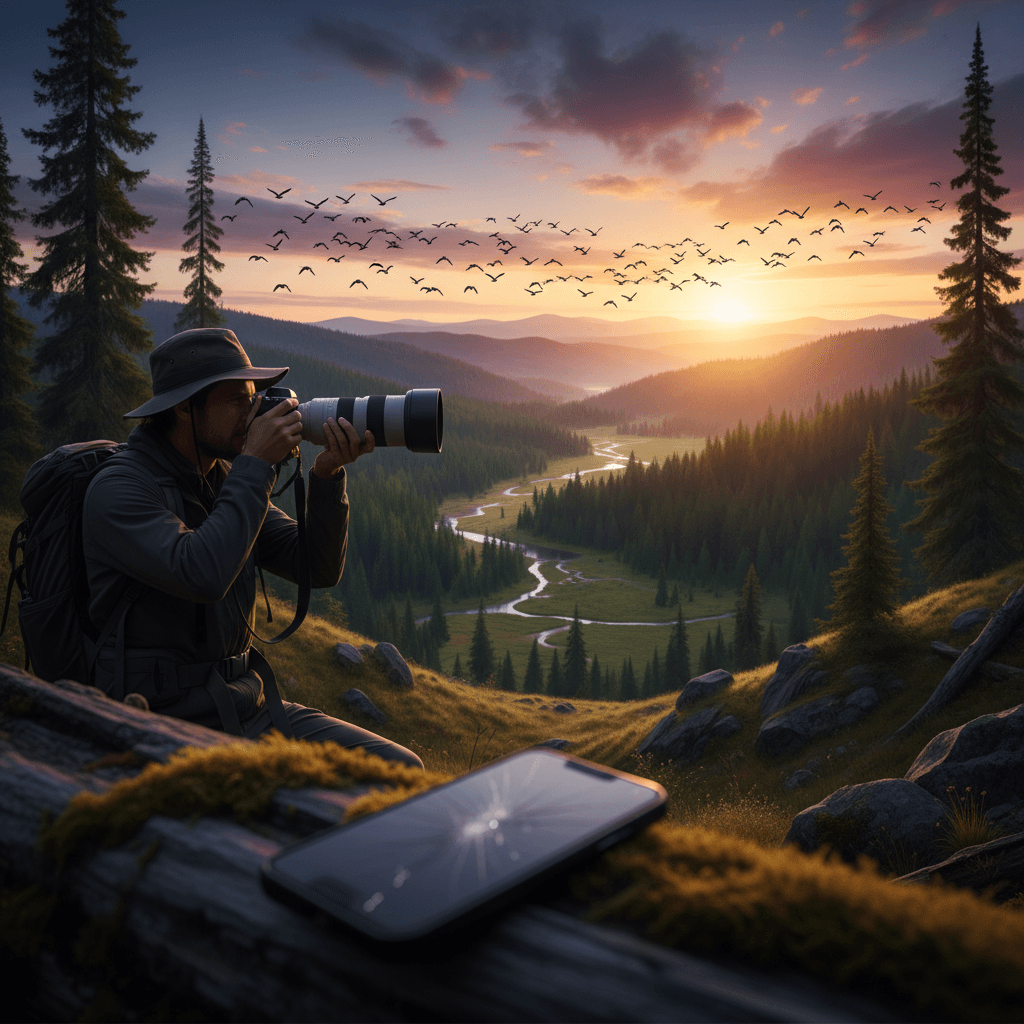
The Wednesday Morning Wake-Up Call
My iPhone gleefully informed me yesterday morning that my daily screen time had hit 7 hours and 42 minutes. I stared at the notification, feeling that familiar, low-grade nausea that accompanies modern digital existence. Between Slack pings, TikTok holes, and the endless email churn, my brain feels like a browser with 84 tabs open — and the fan is screaming.
I know I'm not alone in this. We are a generation of digitally exhausted husks looking for a cure in all the wrong places. We download meditation apps that just keep us staring at our phones. We buy smart rings that gamify our sleep anxiety. But according to a fascinating new piece from PetaPixel, the actual antidote to our algorithm-fried brains might be something your grandfather did in a khaki vest: bird photography.
Yes. Birds. And honestly? The science backing this up is incredibly compelling.
The "So What?" Context: Why Feathers Beat Algorithms
If you're under 45, birdwatching probably sounds like the punchline to a joke about giving up on your social life. But here's the reality: bird photography is quietly becoming the ultimate analog-digital hybrid hobby for the chronically online. It's real-life Pokémon Snap.
Think about the mechanics of our daily lives. Every app we use is designed to eliminate friction. Food arrives in 20 minutes. A car appears in three. Entertainment is spoon-fed to us in 15-second, dopamine-spiked increments. We are conditioned for instant gratification, which is exactly why we're so miserable.
Bird photography is the exact opposite. It is pure, unadulterated friction. You buy heavy gear. You wake up at 5:00 AM. You hike into the damp woods. You sit still. You wait. And 80% of the time, the bird flies away right before your autofocus locks on.
And that massive, infuriating friction is exactly what our brains are starving for.
The Hard Data on Why We're Breaking
Let's look at the numbers, because they paint a grim picture of our current baseline. According to data published by the National Institutes of Health, prolonged exposure to rapid-switch digital media literally alters our prefrontal cortex — the part of the brain responsible for sustained attention and impulse control.
We are losing our ability to just be.
Conversely, the mental health benefits of "active nature observation" are staggering. A recent psychiatric study found that spending just two hours a week in nature — particularly when engaged in a focused task like photography — can drop cortisol levels by 21%. Furthermore, the National Audubon Society reported a massive surge in younger demographics picking up birding since the pandemic, with a 45% increase in app downloads for bird identification among users aged 25-34.