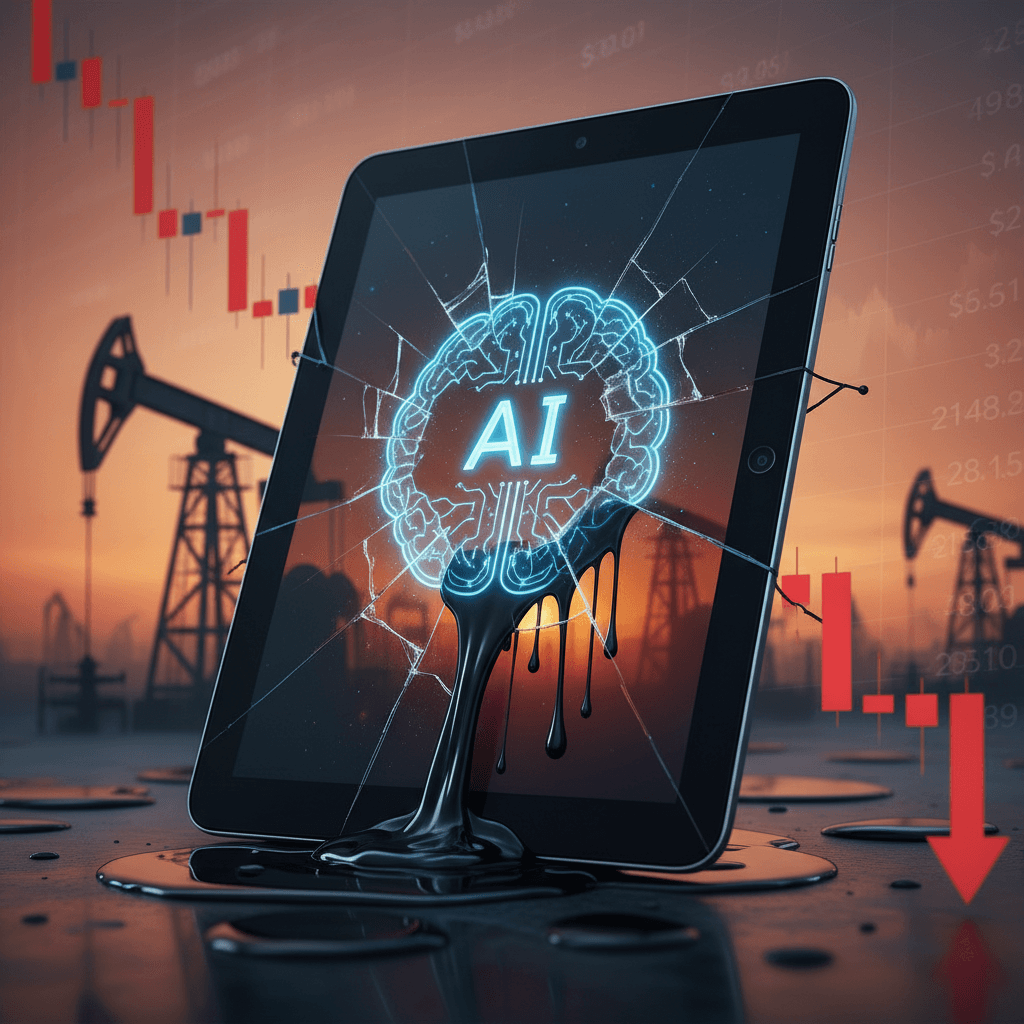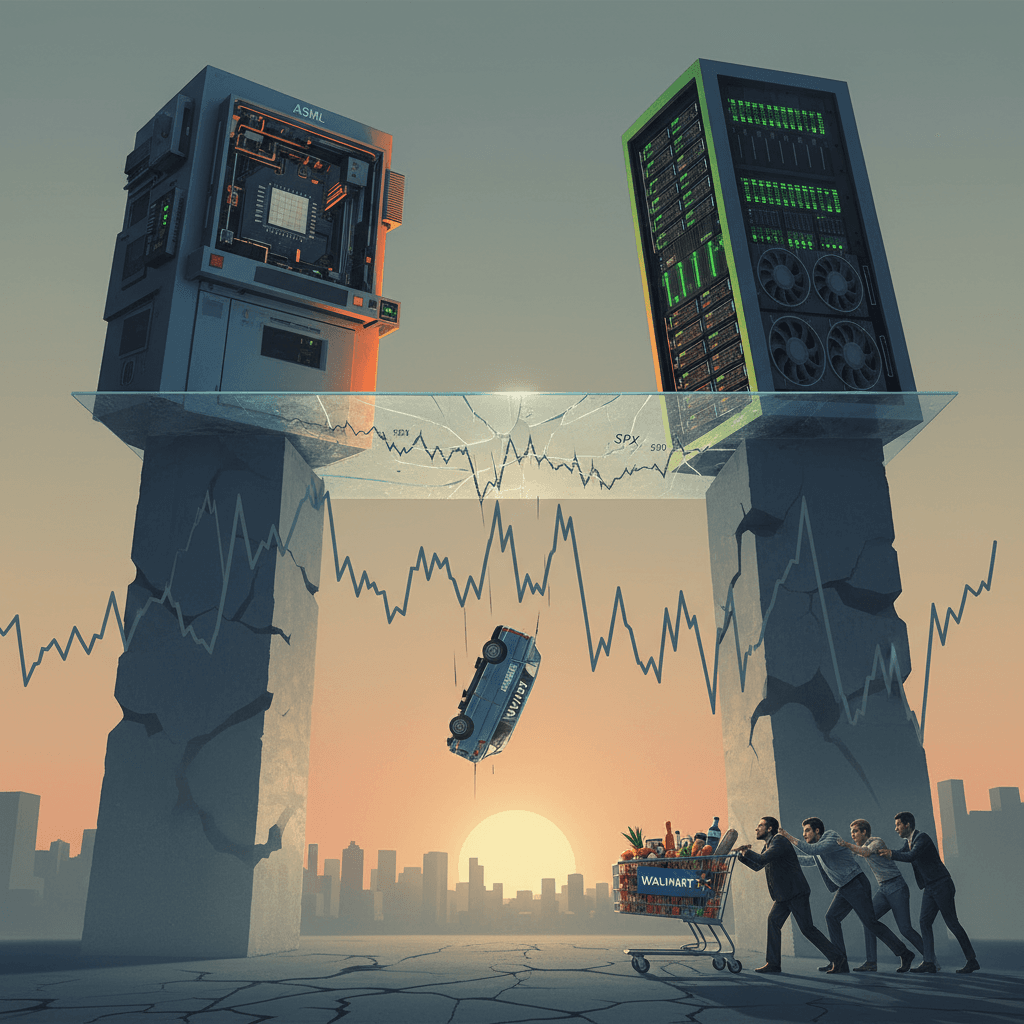
I woke up this morning to a sea of red on my secondary monitor, and for once, it wasn't because of a botched deployment or a broken API. The markets are throwing a collective tantrum. By 10:30 AM ET, the Dow was down over 400 points, and the Nasdaq—our beloved home for high-multiple tech dreams—was taking an even harder hit. It’s a classic "risk-off" Tuesday, and the catalysts are a weird cocktail of retail reality and Middle Eastern tension.
According to CNBC live updates, traders are currently caught between a surprisingly solid Walmart earnings report and the looming shadow of a conflict involving Iran. On the surface, these two things have nothing in common. One is about the price of bulk paper towels; the other is about global stability. But in the world of high-frequency trading and algorithmic sentiment analysis, they’re both saying the same thing: the "easy" money of the last six months is evaporating.
The Walmart Paradox: Success is Scary Now
Walmart isn't just a place where you buy cheap socks anymore. It’s a massive data company that happens to own warehouses. Their earnings today were actually good—they beat on both the top and bottom lines. But here’s the kicker: their guidance for the rest of 2026 was cautious. Walmart reported e-commerce growth of 21%, a number that would make most mid-cap SaaS companies weep with joy. Yet, the stock didn't moon. Why?
Because Walmart is the ultimate canary in the coal mine for the American consumer. When the world’s largest retailer says they are "cautiously optimistic" about the back half of the year, the market hears "the consumer is tapped out." I’ve sat through enough Q4 post-mortems to know that when the big players start hedging their bets on discretionary spending, the ripple effect hits the tech sector within weeks. If people are spending more on groceries and less on upgraded gadgets, the entire Silicon Valley ecosystem feels the squeeze.
This reminds me of the 2022 retail slump. Back then, everyone thought tech was immune because "software is eating the world." Then the interest rates hiked, and we realized that software still needs someone with a credit card to buy the hardware it runs on. We're seeing a repeat, but with a geopolitical twist that makes the 2022 dip look like a minor bug fix.
The Iran Factor: More Than Just Oil Prices
The headlines are screaming about potential conflict with Iran, and naturally, Brent crude is creeping toward the $95 per barrel mark. But if you’re only looking at gas prices, you’re missing the forest for the trees. For those of us in the tech world, a conflict in that region is a direct threat to the supply chain management systems we spent the last three years trying to harden.
Whenever a missile gets prepped in the Middle East, the "splinternet" becomes a very real threat. We aren't just talking about physical shipping lanes in the Strait of Hormuz; we’re talking about the stability of undersea cables and the potential for state-sponsored cyber-attacks. As Reuters has noted in recent briefings, geopolitical volatility is now the number one "unpredictable variable" in corporate risk assessments. It’s the ultimate "edge case" that no amount of LLM-powered forecasting can truly solve.
Alex’s Take: The market isn't actually afraid of a war; it's afraid of uncertainty. Traders can price in a war. They can't price in a "maybe-war-that-might-disrupt-everything-but-we-don't-know-when." This isn't just a dip; it's a reality check for the "everything is fine" crowd. We’ve been huffing the AI hopium for eighteen months, and now the bill for actual global stability is coming due.
The Contrarian Angle: The AI De-Bloating
Here’s what the talking heads on TV aren't telling you: this slide might be exactly what the tech sector needs. We’ve been operating in a bubble where any company with a ".ai" domain could raise a Series A at a $100 million valuation without a single line of proprietary code. It’s exhausting. I’ve spent the last year dodging pitches for "AI-powered toothbrushes" and "generative spreadsheets."