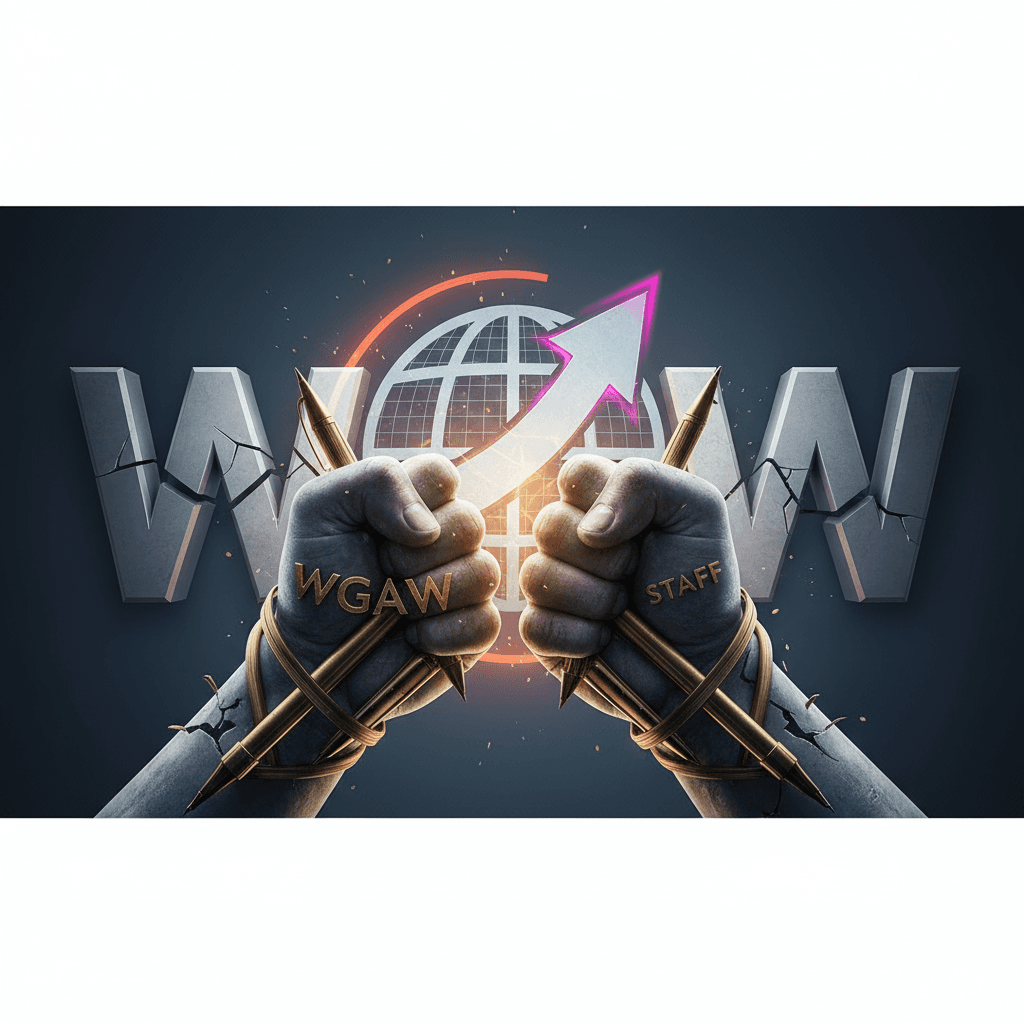
When the Plot Twist Hits Too Close to Home: WGAW Staff Strikes Their Own Guild
So here's a story you couldn't make up even if you tried. If you thought Hollywood's drama was confined to our screens, think again. Just when we were all cheering for the Writers Guild of America West (WGAW) after their epic 2023 victory, they've pulled the ultimate plot twist: they're now facing a strike from their *own* staff. And let me tell you, as someone who spent too many hours glued to the WGA picket line updates last year, this hits different. It's not just trending; it's a whole mood, a collective "wait, what?!" moment across social media, and rightfully so.
The irony here is so thick you could cut it with a ceremonial guild sword. Last year, the WGAW stood strong, fighting tooth and nail against the monolithic studios for fair wages, crucial AI protections, and a slice of the streaming pie. We watched, we supported, we probably tweeted about it. Now, barely a year later, their very own employees, organized under the **Writers Guild Staff Union (WGSU)**, have walked out. This isn't just a ripple; it's a seismic event in labor discussions, proving that even organizations built on workers' rights aren't immune to internal friction. The optics? They're brutal, to say the least, especially for an organization that just championed the underdog.
The WGSU, representing the unsung heroes—the researchers, the administrative pros, the organizers who *literally* helped orchestrate the 2023 strike—initiated their work stoppage in mid-February 2026. This came after months of what they describe as "stalled contract negotiations" and, more damningly, accusations of unfair labor practices by WGAW management. Imagine being on the front lines for writers' rights, only to feel your own rights are being trampled by the very institution you serve. It's a bitter pill to swallow, and it's why this story, first reported in depth by outlets like The Hollywood Reporter, is dominating our feeds.
What's on the Table: The WGSU's Demands (and Why They Matter)
So, what exactly are the WGSU staff asking for? It boils down to a fight for basic fairness and a living wage in one of the most expensive cities on the planet. Their key demands resonate deeply with the struggles many workers face today, especially in high-cost-of-living areas like Los Angeles:
- **Significant Salary Increases:** This is huge. According to WGSU data, a staggering 64% of their members currently earn less than $84,850 annually. Let that sink in for a second, especially in a city where the average rent for a one-bedroom apartment hovers north of $2,500. They're pushing for substantial bumps: a 22% raise in the first year, an 11% raise in the second, and a minimum of 5% in subsequent years. This isn't just about getting by; it's about thriving, or at least not having to choose between groceries and gas.
- **Robust AI Protections:** Sound familiar? The irony is not lost here. Just as the WGA fought valiantly against studios using AI to devalue human writers, the WGSU wants similar safeguards for their own roles. They're demanding protections to ensure AI doesn't erode their job security or the value of their labor. It's a clear signal that the AI conversation isn't just for the 'creatives' at the top; it's a concern for every level of the workforce.
- **Just Cause & Grievance Procedures:** This is about dignity and accountability. The WGSU is seeking clear "just cause" standards for disciplinary actions and terminations, alongside fair grievance procedures. This demand takes on a particularly sharp edge given the WGSU's accusations of WGAW management engaging in unfair labor practices, including the alleged surveillance of workers involved in union activities and the termination of union supporters. That's not just a bad look; it's a direct attack on labor rights.
- **Mutual Accountability and Fairness:** Beyond the specifics, the staff wants a workplace culture that truly reflects the values the WGAW preaches to the industry. It’s about practicing what you preach, ensuring that the internal dynamics are as equitable as the external battles they fight.
Full disclosure: when I first saw the headlines, my brain did a full reboot. The WGA, the union that *just* showed Hollywood who's boss, is getting struck by its own staff? It's like watching your favorite indie band sell out and then get booed by their own roadies. You want to believe in the cause, but then you see the internal politics, and it's a harsh reminder that institutions, no matter how noble their mission, are still run by people. And people? They're messy. Especially when rent's due in LA." - Maya Rodriguez, Culture & Entertainment Editor
This "union vs. union" battle is more than just Hollywood gossip; it's a potent case study. It highlights the complexities of labor relations, the challenges of management even within advocacy groups, and the universal struggle for fair compensation in an increasingly expensive world. For an organization built on fighting for workers, the WGAW now faces its biggest test: living up to its own ideals from within. The world, and certainly the internet, is watching to see how this plot twist resolves.