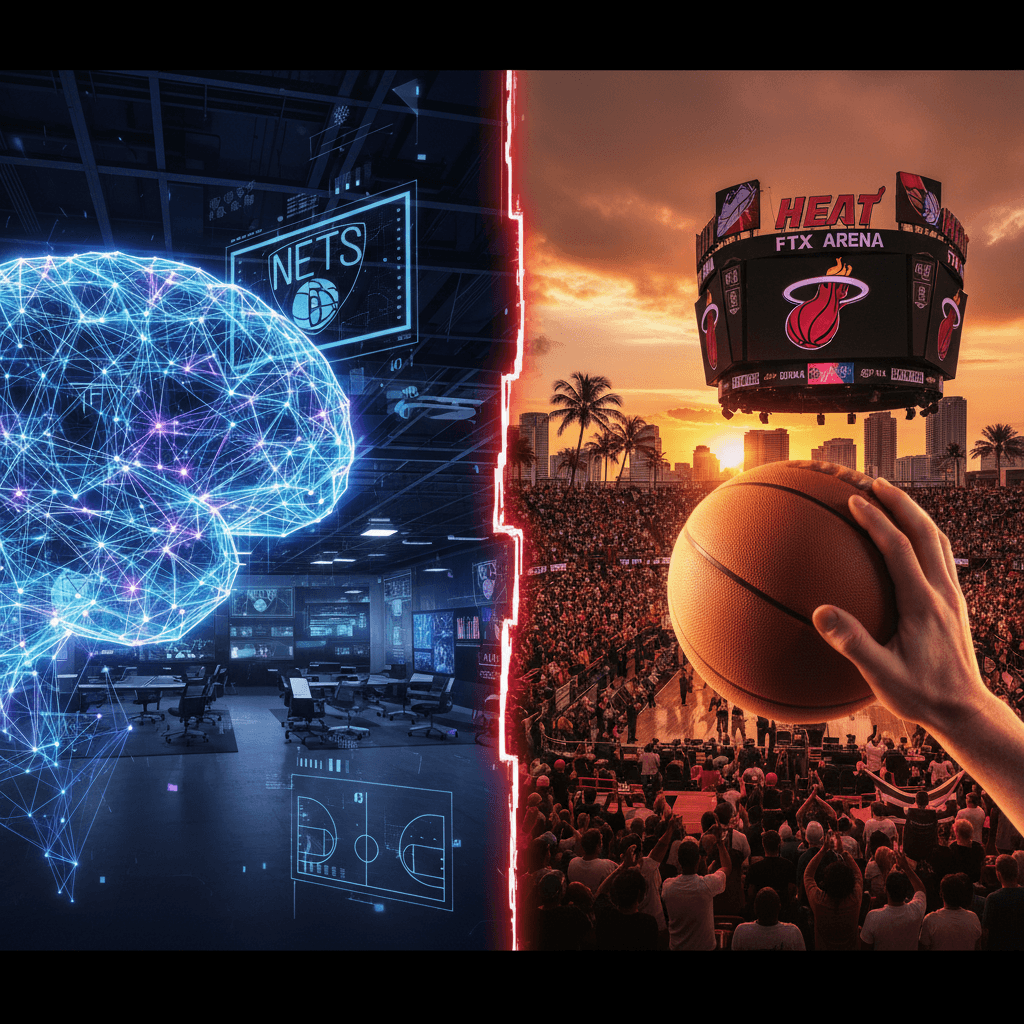
Nets vs Heat: The AI Coaching Gamble That's Tearing Miami Apart

Nets vs Heat: The AI Coaching Gamble That's Tearing Miami Apart

MR
Maya Rodriguez

Culture & Entertainment Editor

·5 min read·1014 words
netsheatgameplayerkinetix
Share:

The clock showed 4.7 seconds. Miami was up by one. The Kinetix AI—the Heat’s $50 million brain trust humming away on a server rack somewhere under the arena—had already run ten million simulations. The data was unequivocal: force Mikal Bridges left, where his field goal percentage drops by 9.3% on contested step-backs. Every Heat defender moved with the cold, calculated certainty of an algorithm. It was perfect, data-driven defense.

And it was perfectly wrong.

Bridges ignored the path of least resistance. He ignored the high-percentage play. He drove right, into two defenders, and threw up a prayer—a fadeaway jumper with a 14% make probability according to the real-time broadcast analytics. It was a terrible shot. An emotional shot. A human shot. It was pure green. Nets win.

I’ve seen enough product demos that promise to solve human problems with pure logic to know exactly what that moment was. It was a rounding error. A glorious, game-winning, soul-crushing rounding error that the machine simply couldn’t compute. And it’s the entire story of the Nets vs. Heat rivalry in 2026.

What's the Real Story Behind the Nets vs. Heat Last Game?

This isn't your classic sports rivalry anymore. It’s not about geography or bad blood from a playoff series five years ago. This is a full-blown philosophical war for the soul of the sport, being fought between Brooklyn and Miami. It’s a referendum on whether a game built on intuition and chemistry can be optimized like a cloud server.

Let's rewind 18 months. After a brutal second-round exit in the 2025 playoffs, the Miami Heat organization did the most Silicon Valley thing imaginable. They didn't just fire a few assistant coaches; they fundamentally outsourced their strategy. They signed an exclusive, eye-watering $50 million deal with Kinetix, a sports-AI startup that promised to revolutionize game management. The platform plugs directly into player biometric data—sleep quality, muscle strain, hydration—and cross-references it with terabytes of on-court tracking data. It tells coach Erik Spoelstra who to play, when to play them, and even what plays to call to maximize efficiency.

The Brooklyn Nets went in the exact opposite direction. After their own disappointing 2025 campaign, they canned their analytics-obsessed coach and brought in a guy named Pat Finnegan, a 65-year-old basketball lifer who thinks "python" is just a snake. The new ownership, chastened by years of chasing trends, slashed the analytics budget by 70%. Their new strategy is built on film study, player relationships, and that unquantifiable, infuriatingly effective concept: gut instinct.

So now, every Nets vs. Heat game is an A/B test playing out in real time. It’s the spreadsheet versus the soul. And right now, the soul is kicking the spreadsheet’s ass.
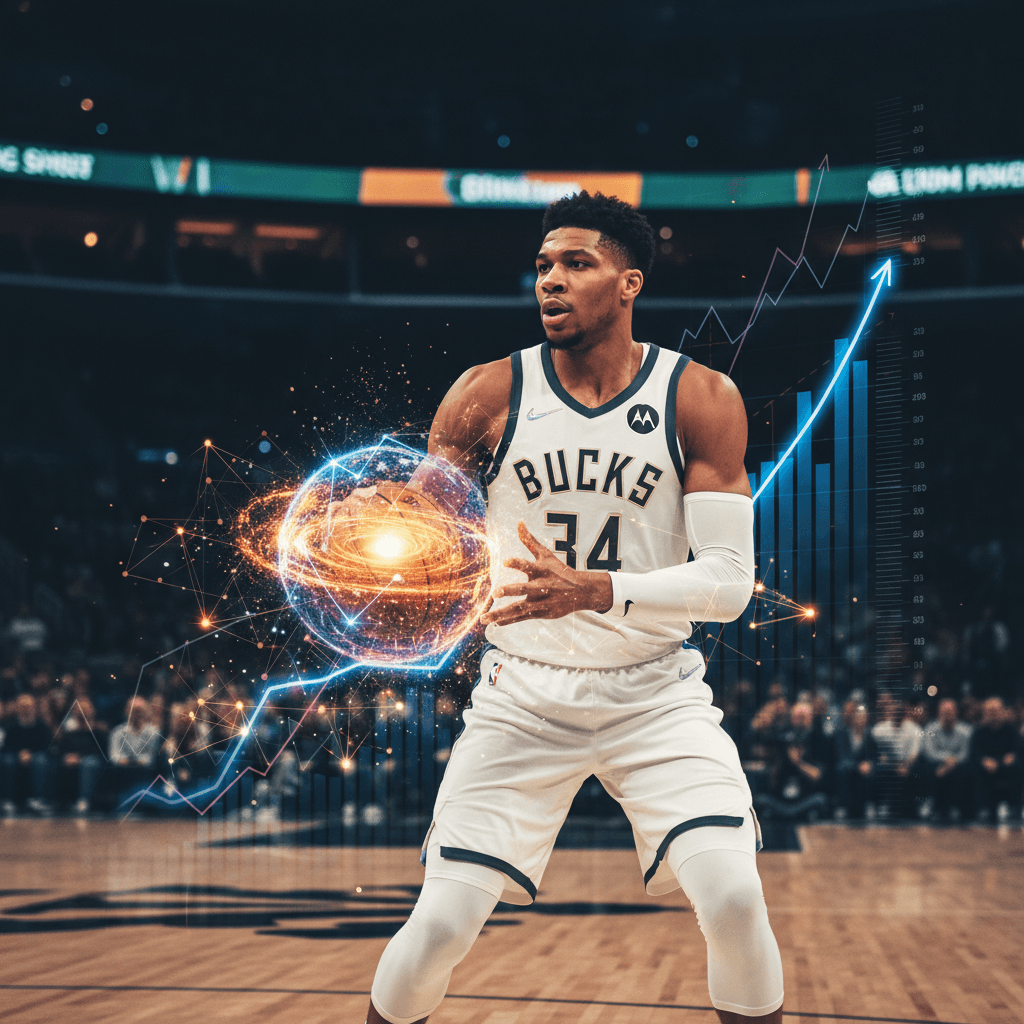

By the Numbers: The Glitch in the Machine

When the Heat’s system is working, it’s terrifyingly efficient. They execute set plays with the precision of a factory robot. But basketball isn’t an assembly line. When things get messy, when chaos reigns in the final two minutes, the system fractures. The data tells the story.

  • Clutch Performance: The Heat have a league-worst record of 8-19 (a 29.6% win rate) in games that are within five points in the last five minutes. The Kinetix AI can’t model desperation.
  • Improvisation Deficit: The Nets lead the NBA in points scored off "broken plays," averaging 18.2 per game. The Heat are dead last at 4.5. Their players seem programmed to only run the designated play, and when it breaks down, they short-circuit.
  • Player Load vs. Player Freedom: According to a report from The Verge on sports technology, the average Heat player spends over four hours a week wired into biometric sensors for Kinetix. The Nets have zero mandatory biometric tracking. One team is optimizing its assets; the other is trusting its people.
  • The Vegas Miscalculation: The betting markets, which increasingly rely on the same kind of AI modeling as Kinetix, have made the Heat favorites in their last three matchups against the Nets. The Nets won all three outright. The public is learning that human unpredictability is a market inefficiency you can exploit.

Is the Nets' Old-School Approach a Sustainable Model?

It’s easy to romanticize the Nets' approach. We all want to believe the grizzled coach drawing up a play in the dirt can outsmart the supercomputer. But this isn't a movie. There are real risks to shunning data entirely.

The Nets’ strategy relies almost entirely on the health and intuition of its key players. An injury to a star like Mikal Bridges could collapse the whole system, as there's no underlying model to optimize the remaining pieces. They are, in engineering terms, a monolith. The Heat, for all their faults, are a microservices architecture; they can swap components in and out and the system adapts. It's just a cold, lifeless system.

The rest of the league isn't picking a side; they're trying to find the balance. Teams like the Warriors and Nuggets use analytics for roster construction and managing player health—the long-term, strategic decisions. But they leave the chaotic, minute-to-minute tactical decisions in the hands of their coaches and star players. They use data as an advisor, not a dictator. It's a lesson Miami is learning the hard way, and it’s a critical metric for success that goes beyond simple points per game.

"You can't quantify heart," Nets coach Pat Finnegan told reporters last week. "You can't run a simulation on who wants it more. The other guys, they're playing chess. We're playing poker. Sometimes you just have to go all-in on a bad hand."

The Hidden Risk: The Unbearable Predictability of Being

The biggest danger for the Heat isn't just losing games. It's that the Kinetix AI is making them fundamentally predictable. Opposing scouts are having a field day. They know Miami will always make the most "correct" defensive rotation. They know which player will get the ball in a given situation because the AI has determined he has a 2.4% higher chance of success.

It creates a team that is easy to beat if you’re willing to do something illogical. Something stupid. Something human.

I’ve been there, debugging

Related Articles