The OnePlus 16's 0.9mm Bezel Leak is an Ergonomic Nightmare
TECHNews

The OnePlus 16's 0.9mm Bezel Leak is an Ergonomic Nightmare

Alex Chen
Alex Chen

Senior Tech Editor

·4 min read·843 words
bezelphoneedgescreenoneplus
Share:

The Credit Card Test

0.9 millimeters. Grab a credit card from your wallet and look at the edge. That tiny sliver of plastic is exactly how much dead space the upcoming OnePlus 16 will reportedly leave between your glowing TikTok feed and the physical edge of the phone.

According to a new leak reported by Notebookcheck, the next OnePlus flagship is preparing to completely obliterate the display border. The Chinese smartphone maker is apparently sourcing a custom flat OLED panel designed to push bezels into the sub-1mm territory. For context, tech reviewers lost their collective minds when Apple shrunk the iPhone 15 Pro borders to a then-unprecedented 1.55mm. Xiaomi aggressively followed suit. Now, OnePlus wants the crown.

But here's the real question: why are we celebrating this?

As someone who spends an embarrassing amount of time playing Genshin Impact and scrolling through Discord on my phone, this leak doesn't make me excited. It makes my thumbs cramp just thinking about it. We have officially reached the point where smartphone design is actively hostile to the human hand.

The "So What?" Context: Your Hand is the Enemy

The tech industry has spent the last decade treating bezels like a disease that needs curing. We treat pure, uninterrupted screens as the ultimate altar of modern technology—a cultural obsession so deep that even analog toy companies are making desperate plays for screen dominance.

But borders exist for a reason. They are the handles on the digital mug. They give your fleshy, imperfect hands a place to rest without accidentally liking your ex's Instagram post from 2018.

If you're upgrading your phone in the next 18 months, this sub-1mm trend matters because it fundamentally changes how you have to physically interact with your device. Without a bezel, your palm becomes a liability. Every time you stretch your thumb across the screen to reach a back button, the base of your thumb will inevitably brush that 0.9mm edge.

  • The Software Band-Aid: Manufacturers claim palm rejection technology will save us. It won't. It never works perfectly.
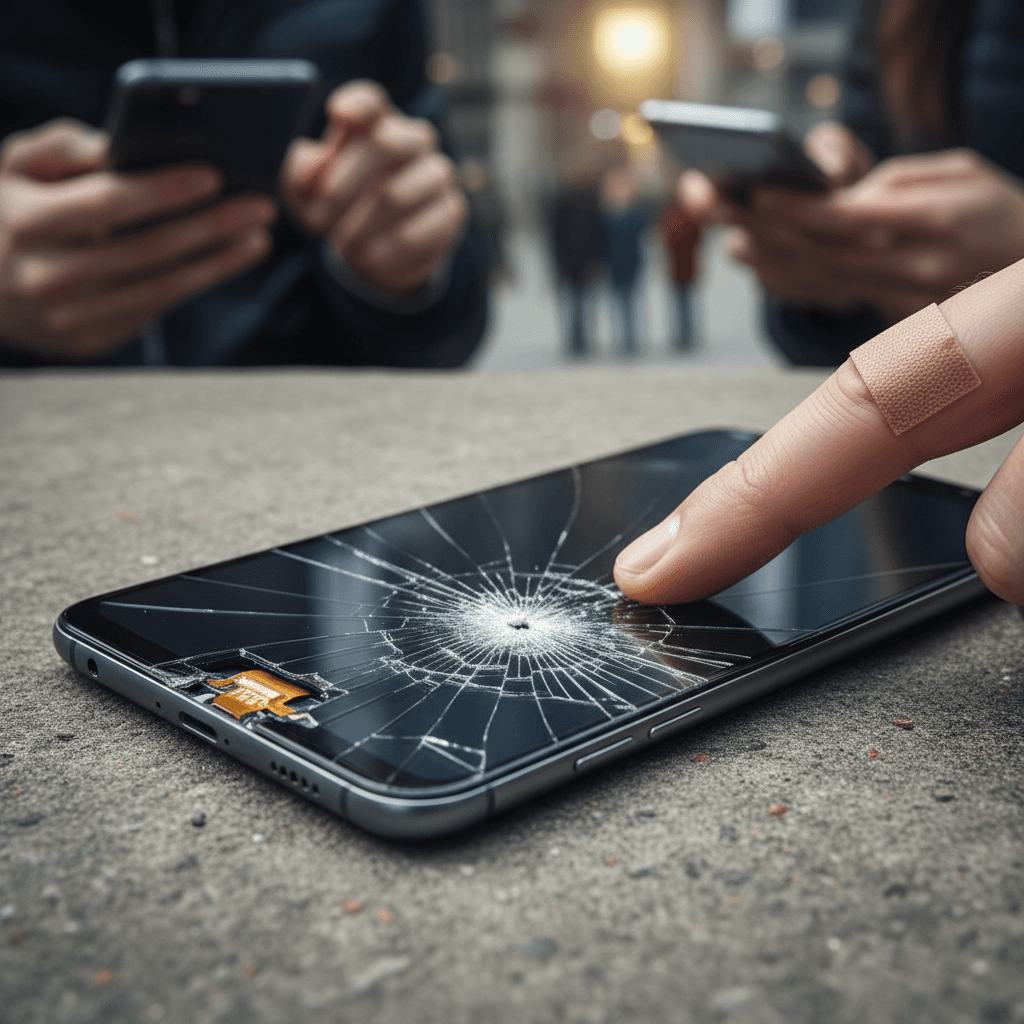
  • The Durability Tax: A bezel acts as a structural shock absorber. When you drop a phone with a 0.9mm bezel, the impact goes straight into the OLED matrix.
  • The Case Paradox: What's the point of engineering a zero-bezel phone if 90% of users are immediately going to slap a thick OtterBox on it just to be able to hold the damn thing?

We've Made This Exact Mistake Before

Let's look at the precedent here. Remember 2015? Samsung introduced the Galaxy S6 Edge, and mainstream outlets like The Verge praised its futuristic look. The curved screen was the ultimate flex. It looked incredible in press renders.


And it was absolutely miserable to use.

The phantom touches were relentless. Videos warped weirdly at the edges. Glare was a constant nightmare. Over the next seven years, Samsung quietly and awkwardly walked back the curve, flattening their screens millimeter by millimeter until the recent Galaxy S24 Ultra arrived completely flat. We learned that wrapping a screen around the side of a device was an ergonomic failure.

Now, we're making the exact same mistake with flat panels. By erasing the bezel entirely, we are recreating the "Edge" problem without the curve. We are stripping away the very necessary buffer zone between the hardware we hold and the software we touch.

The Hidden Cost of the Zero-Bezel Dream

Let's talk numbers, because the true cost of this design trend hits your wallet hard.

Right now, replacing a shattered OLED screen on a flagship phone typically costs between $250 and $350. According to repair advocates at iFixit, screens that push right to the absolute edge of the chassis are notoriously difficult to remove without destroying the panel entirely. There is no metal or thick glass lip to protect the fragile organic diodes from a side-impact drop.

A sub-1mm bezel means that a drop on the corner isn't just a cracked glass problem anymore—it's an instant dead-pixel problem. You aren't just buying a phone; you're buying a fragile glass balloon.

Editor's take: We are engineering phones for Instagram renders, not for human hands. The tech industry is stuck in a spec-sheet echo chamber where lower numbers automatically equal "better." But a 0.9mm bezel isn't an innovation. It's a fundamental misunderstanding of how humans actually use tools. A hammer without a handle is just a heavy piece of metal, and a screen without a border is just a phantom-touch machine.

The Downstream Effect: The Return of the "Grip"

So where does this leave us when the OnePlus 16 and its inevitable copycats flood the market next year?

I'm not going to give you some vague "only time will tell" nonsense. Here is my specific prediction: The sub-1mm bezel will trigger a massive, highly profitable pivot in the smartphone accessory market by Q4 2025.

If this 0.9mm technology reaches commercial scale across major Android flagships, expect premium case manufacturers (think Spigen, Nomad, Dbrand) to completely change their marketing. Instead of selling "ultra-thin" or "invisible" cases, they will start explicitly marketing "Ergonomic Grip Borders."

Related Articles