The Sandwich vs. The Server
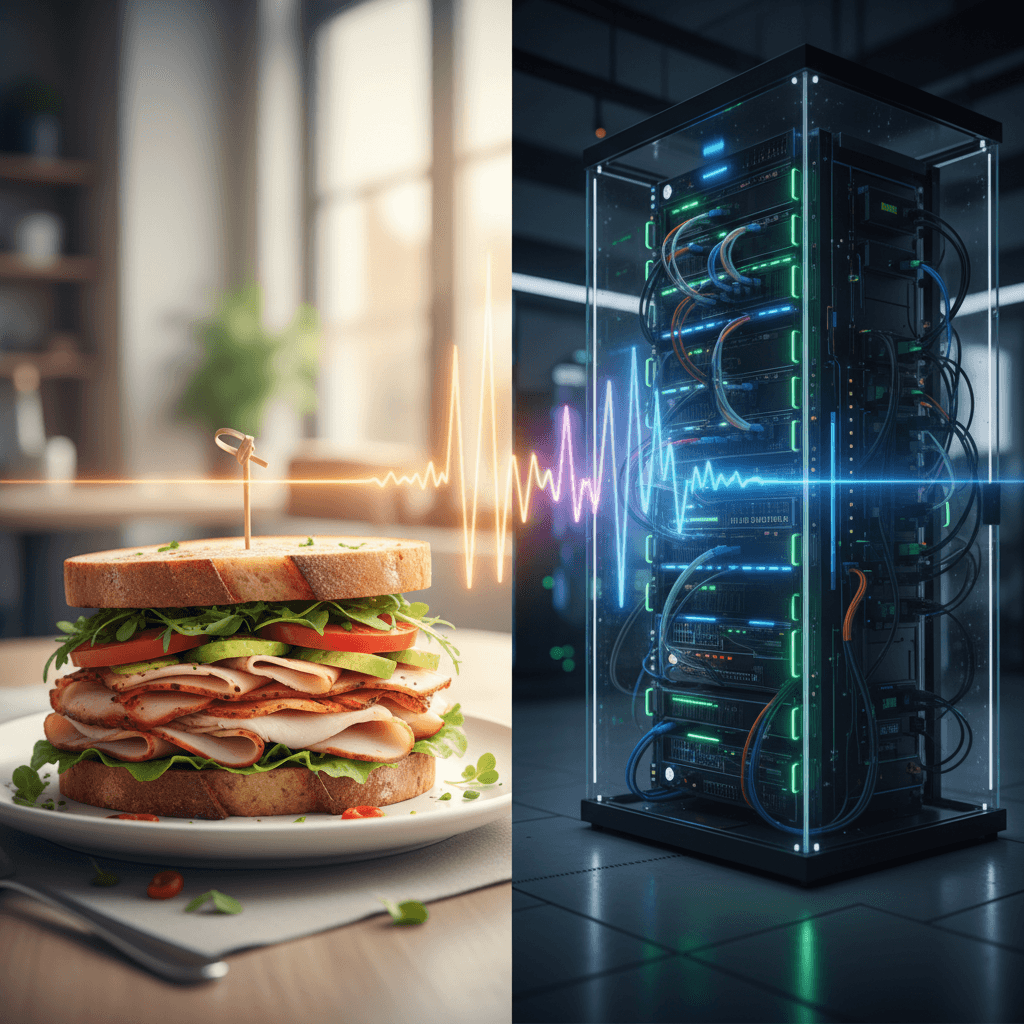
Sam Altman wants to talk about your lunch. Specifically, how much energy it took to make it, and why that makes you just as much of a resource hog as a cluster of H100 GPUs. It is a classic Silicon Valley pivot—taking a massive, systemic problem and reframing it as a relatable, almost philosophical comparison. But let’s be real: comparing the metabolic rate of a human being to the cooling requirements of a 100,000-node data center is like comparing a candle to a forest fire because they both happen to produce heat.
I’ve spent a decade watching these guys dance around the consequences of their "move fast and break things" ethos. Usually, the "breaking" involves taxi regulations or hotel zoning laws. This time, it involves the power grid. As reported by TechCrunch, Altman is essentially arguing that if we’re going to freak out about the wattage required to train GPT-5, we should also look in the mirror at our own biological inefficiencies. It’s bold. It’s weird. It’s Sam.
Why This Matters Right Now
You should care about this because your electricity bill is about to become a battleground. We are currently seeing a massive surge in energy demand that the existing infrastructure simply wasn't built to handle. When the CEO of the world's most influential AI company starts comparing silicon to biology, he isn't just making a "fun fact" observation. He is setting the stage for a policy fight. He wants to normalize the idea that "intelligence"—whether biological or synthetic—has a high energy price tag that we should all just accept as the cost of doing business.
The numbers are staggering. According to Reuters, data centers could consume up to 9% of total U.S. electricity generation by 2030, up from roughly 4% today. We are talking about doubling the footprint of the digital world in less than a decade. I remember sitting in a server room in 2014, complaining about the heat from a few measly racks; today’s engineers are looking at liquid-cooling solutions that look more like industrial chemical plants than computer hardware.
The Data They Don't Want You to Crunch
Let’s look at the "biological" argument through a cold, technical lens. A human brain runs on about 20 watts of power. That is roughly the energy needed to power a dim LED light bulb. In exchange for those 20 watts, you get consciousness, creativity, the ability to drive a car, and—occasionally—the ability to write code that actually compiles. By contrast, training a large language model (LLM) requires megawatts of sustained power for months on end.
- A single ChatGPT query uses roughly 10 times more electricity than a Google search.
- Microsoft and Google’s combined energy consumption has already surpassed that of entire countries like Iceland or Ghana.
- Estimates suggest OpenAI’s "Stargate" supercomputer project could require up to 5 gigawatts of power—enough to light up several million homes.
So, when Altman reminds us that "humans use energy too," he’s ignoring the scale of the delta. I can write a snarky article on a ham sandwich and a cup of coffee. To get an AI to do the same, you need to burn enough coal to power a small suburb. The efficiency gap isn't just wide; it's astronomical.
The Angle Everyone is Missing: The "Personhood" Shield
There is a deeper, more cynical pattern at play here. By comparing AI energy use to human energy use, Altman is subtly personifying the machine. This is a brilliant legal and PR strategy. If we start thinking of AI as a "digital person," then denying it energy starts to feel like a human rights violation rather than a corporate regulation issue.
We saw this before with the "corporate personhood" debates in the early 2000s. If a corporation is a person, it has free speech. If an AI is "like a human," it has a right to "eat" (consume power). It’s a way to move the conversation away from ESG goals and toward a debate about the "necessity" of artificial intelligence for the survival of the species. It’s a high-stakes shell game.