Bruce Campbell & The Fragile Fan Economy

Bruce Campbell & The Fragile Fan Economy

MR
Maya Rodriguez

Culture & Entertainment Editor

·5 min read·1075 words
personcampbellproductevildead
Share:

The news about Bruce Campbell isn’t just about a beloved actor’s health. Let’s get that out of the way. The outpouring of support is real, it’s deserved, and anyone with a pulse wishes him the best. But the real story—the one buried under the get-well-soon tweets—is the sound of a critical server going down in the middle of a product launch. It’s a single point of failure in a system that pretends it has redundancy.

The system is the fan convention circuit. A sprawling, chaotic, and astonishingly profitable industry estimated to be worth over five billion dollars globally. And its core product isn't the cheap merch or the overpriced hot dogs. It’s access. It’s proximity. It’s selling 45-second blocks of a celebrity’s time, packaged and priced like a digital commodity.

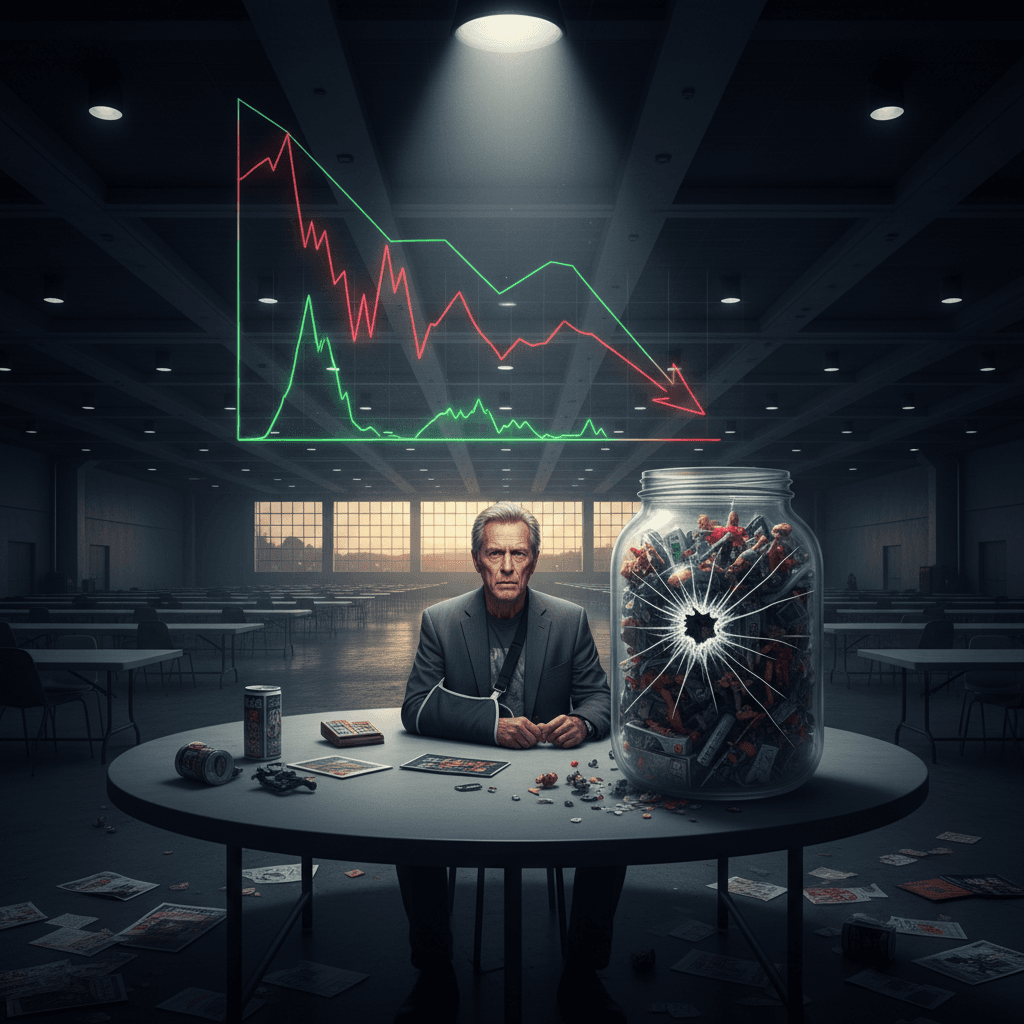
This is the "Celebrity as a Service" (CaaS) model. And Bruce Campbell, for a massive and loyal fanbase, is a Tier-1 enterprise provider. When he cancels, the entire stack wobbles.

What Happens When The Product Is A Person?

The official narrative is simple and human: a man needs to step back from work to focus on his health. The organizers of events like the upcoming Motor City Comic Con release statements of support, promise refunds for his specific "experiences," and wish him a speedy recovery. All true. All appropriate.

But the reality is a frantic, behind-the-scenes scramble that looks a lot like every outage call I’ve ever been on at 3 AM. The headliner isn't just a guest; he's the load-bearing wall of the entire event's P&L. He’s the anchor tenant in the mall. People don't just buy a ticket to the con; they buy a ticket because Bruce is going to be there. They book non-refundable flights to Detroit. They reserve hotel rooms. They take time off work.

Let's run the numbers. A standard autograph from a star of Campbell's caliber runs anywhere from $60 to $100. A photo op can easily hit $120-$150. A conservative estimate? Campbell could likely sign for 500 fans in a single day. At $80 a pop, that’s $40,000. For one person. In one day. Before a single photo op is sold. Now multiply that by a two or three-day event. The convention takes a hefty cut, usually around 20-30%, but the raw cash flow is immense.

When that revenue stream vanishes overnight, it's not a minor hiccup. It's a catastrophic failure. It’s like discovering your entire cloud infrastructure relies on a single, aging server in some guy’s basement. A server that just got sick.

How Many Evil Dead Movies Are There, and Why Does That Matter?

The obsession with the Evil Dead franchise—from the original 1981 cult classic to the more recent Evil Dead Rise—is the fuel for this economic engine. The sheer volume of fan engagement, from debating the timeline of the movies to creating intricate cosplay, creates a durable market for nostalgia. Campbell isn't just selling his signature; he's selling a connection to a formative cultural memory.

This is where the CaaS model gets so potent and so dangerous. It monetizes the parasocial relationship. The fans feel they know Ash Williams. Paying $120 for a photo puts them, for a fleeting moment, in the same physical space as that icon. It’s a transaction designed to convert nostalgia into cash.

But what the industry, and by extension the fans, often forget is that the person providing this service is just that—a person. Not a scalable, cloud-hosted API with 99.999% uptime. The human body doesn't adhere to service-level agreements. It gets tired. It gets sick.

This isn't a new phenomenon, but the scale is. I'm reminded of the early days of the App Store. A single developer could create a hit app like Flappy Bird and become an overnight millionaire. The entire ecosystem depended on that one person. When the developer, Dong Nguyen, famously pulled the app in 2014 because he couldn't handle the pressure, the market went into a frenzy. People were selling iPhones with the app still installed for thousands of dollars. It revealed the absurdity of a massive market relying on the whims and well-being of a single creator.

This is Flappy Bird, but for the live events industry. The code isn't digital; it's biological. And it's not backed up.

The Downstream Damage

The stakeholders nobody mentions in the press releases are the ones who get hit the hardest. It’s the artist in Artist's Alley who paid $500 for a table, banking on the foot traffic Campbell would generate. It’s the local hotel that sees a wave of cancellations. It's the small business that prints custom t-shirts. It's a whole downstream economy built on the assumption that the headliner will show up.

This is a supply chain crisis, plain and simple. In tech, if a critical chip supplier in Taiwan has a factory fire, companies like Apple and Nvidia have contingency plans. They have second-source suppliers. They've modeled this risk. The fan convention circuit has no such thing. For the Evil Dead fanbase, Bruce Campbell is a single-source supplier. There is no alternative. This is a business model with zero fault tolerance.

It exposes the lie at the heart of the modern gossip and celebrity machine, where public figures are dissected and analyzed like lines of code. The public persona, carefully managed and monetized, becomes the entire story. We see something similar in how the algorithm treats athletes like Megan Keller, flattening a real person into a series of data points for engagement. When a real-life crisis like a cancer diagnosis hits, it shatters the illusion. It reminds everyone that the "product" is a human being dealing with something terrifyingly real.

This feels a lot like the broader health and wellness industry, which often peddles easy solutions and perfect outcomes. It's a market built on promises that can't always be kept, not unlike the dynamics explored in the business of dentistry, where the marketing can obscure the medical reality, something we've seen in the fight over the truth behind billion-dollar dental products.

My Verdict: The CaaS Model is a Bubble

The celebrity-centric fan convention model is fundamentally broken. It’s a gig economy with higher stakes, built on the precarious health and relentless emotional labor of a few key individuals. It extracts enormous value while centralizing all the risk onto the biological and mental well-being of the celebrity.

The news, first reported by Deadline, is a wake-up call. Organizers need to start thinking like system architects.

Related Articles